Why Cold-Pressed Oils Taste Alive
Pour a spoon of industrial refined oil and smell it. Nothing. That absence is the point of refining — and everything wrong with it. An oil stripped of aroma has been stripped of most everything else too.
The wood press
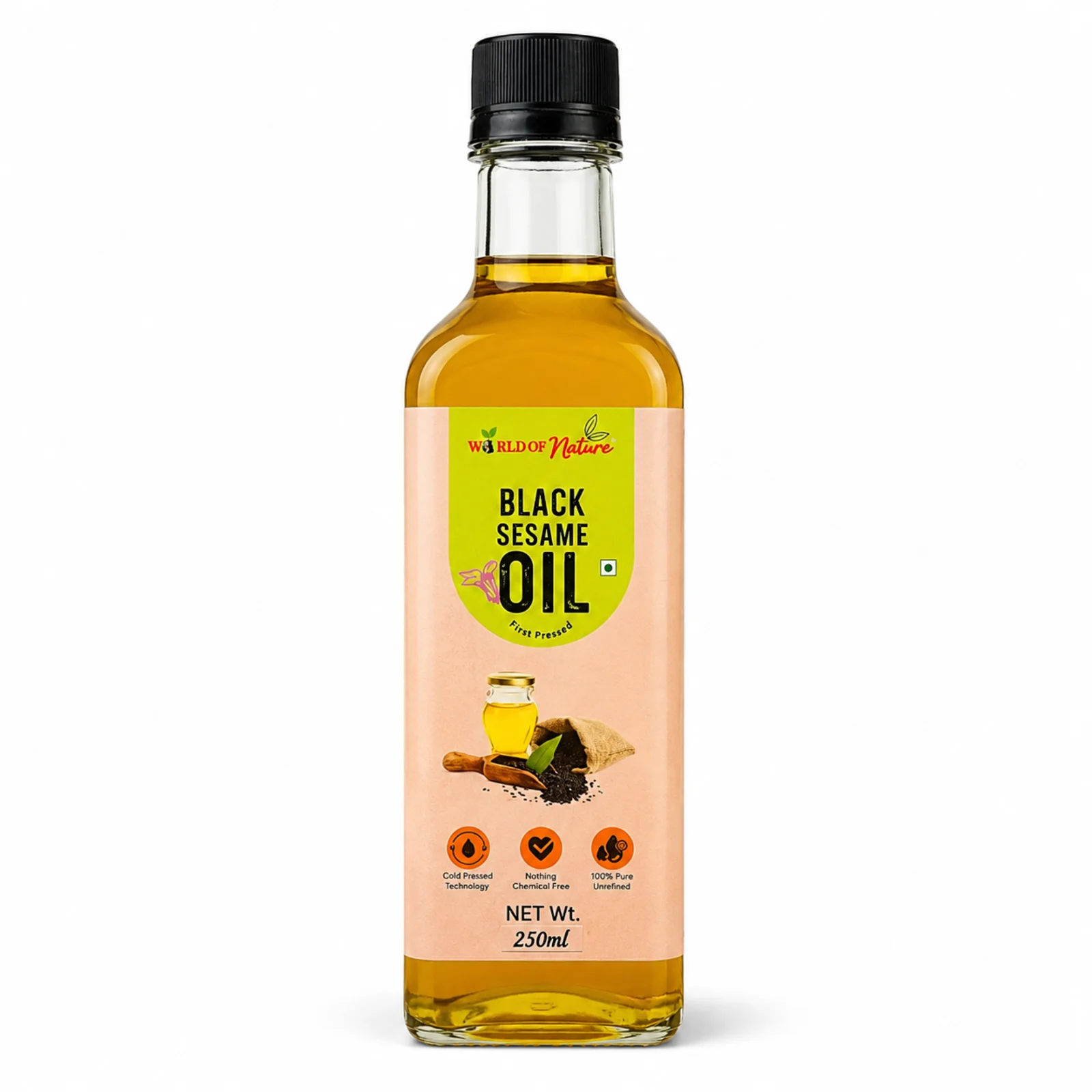
Cold-pressing — in the old Indian method, a wooden ghani turned slowly — keeps the seed below the temperature where its delicate compounds break down. The yield is lower. The oil is cloudy, fragrant, and tastes unmistakably of sesame, mustard, or coconut.
How to use them
Strong-flavoured cold-pressed oils shine where they are not overheated: mustard oil for pickles and finishing, sesame for dressings and low flames, coconut for gentle sautés and baking. For high-heat frying, ghee remains the traditional — and most stable — choice.
Every oil we stock names its seed, its method and its region. If a bottle cannot tell you those three things, it is hiding at least one of them.